

Ever wondered why some countries seem to thrive economically while others struggle? The answer often lies in their choice of economic system. It’s not just about money; it’s about how resources are allocated, who makes the decisions, and what motivates production.
In this article, we’ll explore the fascinating world of types of economic systems market, command, mixed. We’ll break down each system, highlighting its strengths, weaknesses, and real-world examples. By the end, you’ll have a solid understanding of how different economic systems shape our world.
Understanding Economic Systems
An economic system is essentially the framework a society uses to organize the production, distribution, and consumption of goods and services. It’s the set of rules, institutions, and customs that determine how resources are allocated.
These systems answer fundamental questions:
- What goods and services should be produced?
- How should these goods and services be produced?
- For whom should these goods and services be produced?
Market Economy The Power of Supply and Demand
A market economy, also known as a free market economy or capitalism, is driven by the forces of supply and demand. Private individuals and businesses own the factors of production, such as land, labor, and capital.
Decisions about what to produce, how to produce, and for whom to produce are primarily made by individuals and firms acting in their own self-interest. Competition plays a vital role in this system.
Key Characteristics of a Market Economy
Several features define a market economy:
- Private Property: Individuals have the right to own and control property, including land, buildings, and businesses.
- Freedom of Choice: Consumers are free to choose what to buy, and producers are free to choose what to produce.
- Competition: Businesses compete with each other for customers, leading to innovation and efficiency.
- Self-Interest: Individuals and firms are motivated by their own self-interest, which drives economic activity.
- Limited Government Intervention: The government plays a minimal role in the economy, primarily focusing on enforcing contracts and protecting property rights.
Advantages of a Market Economy

Market economies boast several advantages:
- Efficiency: Resources are allocated efficiently based on supply and demand.
- Innovation: Competition encourages businesses to innovate and develop new products and services.
- Consumer Choice: Consumers have a wide range of choices, leading to greater satisfaction.
- Economic Growth: The pursuit of profit motivates businesses to invest and expand, leading to economic growth.
Disadvantages of a Market Economy
Despite its strengths, a market economy also has drawbacks:
- Inequality: Income and wealth can be distributed unequally, leading to social disparities.
- Market Failures: Markets may fail to provide certain goods and services, such as public goods and healthcare.
- Instability: Market economies are prone to economic cycles of boom and bust.
- Environmental Degradation: The pursuit of profit can lead to environmental damage.
Examples of Market Economies
The United States, Hong Kong, and Singapore are often cited as examples of market economies. While these countries have varying degrees of government regulation, they generally rely on market forces to allocate resources.
Command Economy Centralized Control
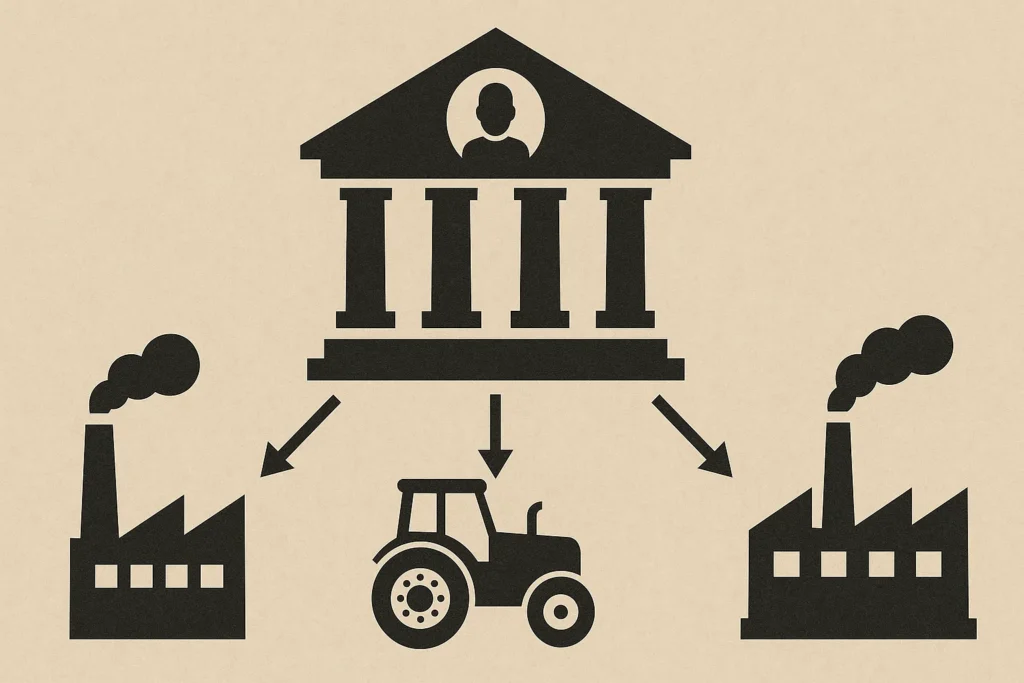
A command economy, also known as a planned economy, is characterized by centralized government control over the means of production. The government owns and controls resources, and it makes decisions about what to produce, how to produce, and for whom to produce.
Individual choice is limited in a command economy. The government sets production quotas and prices, and it allocates resources according to its own priorities.
Key Characteristics of a Command Economy
Several features define a command economy:
- Government Ownership: The government owns and controls the factors of production.
- Central Planning: The government makes all major economic decisions through a central planning agency.
- Limited Individual Choice: Consumers have limited choices, and producers have little autonomy.
- Price Controls: The government sets prices for goods and services.
- Lack of Competition: There is little or no competition among businesses.
Advantages of a Command Economy
Command economies can offer certain advantages:
- Reduced Inequality: The government can redistribute income and wealth to reduce inequality.
- Economic Stability: Central planning can help to stabilize the economy and prevent economic cycles.
- Provision of Public Goods: The government can provide public goods and services, such as healthcare and education.
- Rapid Industrialization: The government can direct resources to promote rapid industrialization.
Disadvantages of a Command Economy
Command economies also face significant challenges:
- Inefficiency: Central planning is often inefficient and leads to misallocation of resources.
- Lack of Innovation: The lack of competition stifles innovation and economic growth.
- Limited Consumer Choice: Consumers have limited choices, leading to dissatisfaction.
- Lack of Freedom: Individuals have limited economic freedom and autonomy.
Examples of Command Economies
Historically, the Soviet Union and North Korea have been examples of command economies. However, even these countries have introduced some market-oriented reforms in recent years. Cuba is another example, although it is slowly opening up to more market-based activities.
Mixed Economy: A Blend of Systems
A mixed economy combines elements of both market and command economies. It features private ownership and market-based decision-making, but the government also plays a significant role in regulating the economy and providing public goods and services.
Most modern economies are mixed economies. The degree of government intervention varies from country to country.
Key Characteristics of a Mixed Economy
Several features define a mixed economy:
- Private and Public Ownership: Both private individuals and the government own resources.
- Market and Government Decision-Making: Economic decisions are made by both individuals and the government.
- Regulation: The government regulates the economy to protect consumers, workers, and the environment.
- Provision of Public Goods: The government provides public goods and services, such as healthcare, education, and infrastructure.
- Social Safety Nets: The government provides social safety nets, such as unemployment insurance and welfare programs.
Advantages of a Mixed Economy
Mixed economies offer a balance of benefits:
- Efficiency and Innovation: Market forces promote efficiency and innovation.
- Social Welfare: Government intervention provides social welfare and reduces inequality.
- Economic Stability: Government policies can help to stabilize the economy.
- Protection of Public Goods: The government can protect public goods and the environment.
Disadvantages of a Mixed Economy
Mixed economies can also face challenges:
- Government Inefficiency: Government intervention can be inefficient and lead to bureaucracy.
- Taxes: Government spending requires taxes, which can reduce economic incentives.
- Regulation Costs: Regulation can be costly and burdensome for businesses.
- Political Influence: Government policies can be influenced by political considerations.
Examples of Mixed Economies
Most developed countries, including the United States, Canada, Germany, and Japan, are considered mixed economies. They combine market-based principles with varying degrees of government intervention.
The Spectrum of Economic Systems
It’s important to understand that economic systems exist on a spectrum. No country is purely a market economy or a command economy.
Instead, countries fall somewhere along the spectrum, depending on the degree of government intervention in the economy. Some countries lean more towards the market end of the spectrum, while others lean more towards the command end.
Factors Influencing the Choice of Economic System
Several factors influence a country’s choice of economic system:
- Ideology: Political and economic ideologies play a significant role in shaping economic systems.
- History: A country’s history and cultural traditions can influence its economic system.
- Resource Endowment: The availability of natural resources can affect economic policies.
- Level of Development: The level of economic development can influence the choice of economic system.
- Global Integration: Globalization and international trade can influence economic policies.
The Future of Economic Systems
The global economy is constantly evolving, and economic systems are adapting to new challenges and opportunities. Technological advancements, globalization, and demographic shifts are all shaping the future of economic systems.
Some trends to watch include:
- Increased Automation: Automation and artificial intelligence are transforming the labor market and requiring new economic policies.
- Growing Inequality: Income and wealth inequality are increasing in many countries, leading to social and political tensions.
- Climate Change: Climate change is posing significant economic challenges and requiring governments to adopt sustainable economic policies.
- Rise of the Digital Economy: The digital economy is creating new opportunities and challenges for economic systems.
Conclusion
Understanding the types of economic systems: market, command, mixed is crucial for comprehending how societies organize their economic activities. Each system has its strengths and weaknesses, and the choice of economic system depends on a variety of factors. Most modern economies are mixed economies, combining elements of both market and command systems. As the global economy continues to evolve, economic systems will need to adapt to new challenges and opportunities.
What are your thoughts on the best approach? Have you witnessed firsthand the effects of a specific economic system? Share your experiences and opinions in the comments below!