
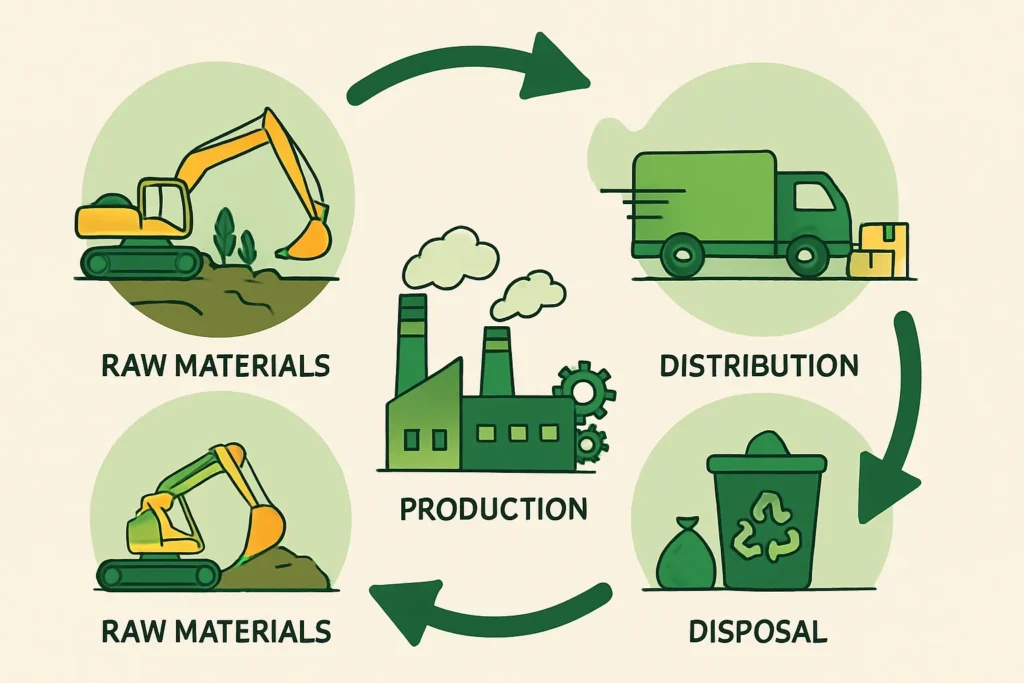
Ever wondered about the true environmental cost of your favorite products? From the materials used to create them to how they’re disposed of, every step leaves a footprint. Understanding this impact is crucial, and that’s where a Life-Cycle Assessment Basics Guide comes in handy.
This guide will break down the complexities of Life-Cycle Assessment (LCA) in simple terms. You’ll learn what it is, why it matters, and how it can help us make more sustainable choices. Get ready to dive into the world of environmental impact analysis!
What is Life-Cycle Assessment (LCA)?
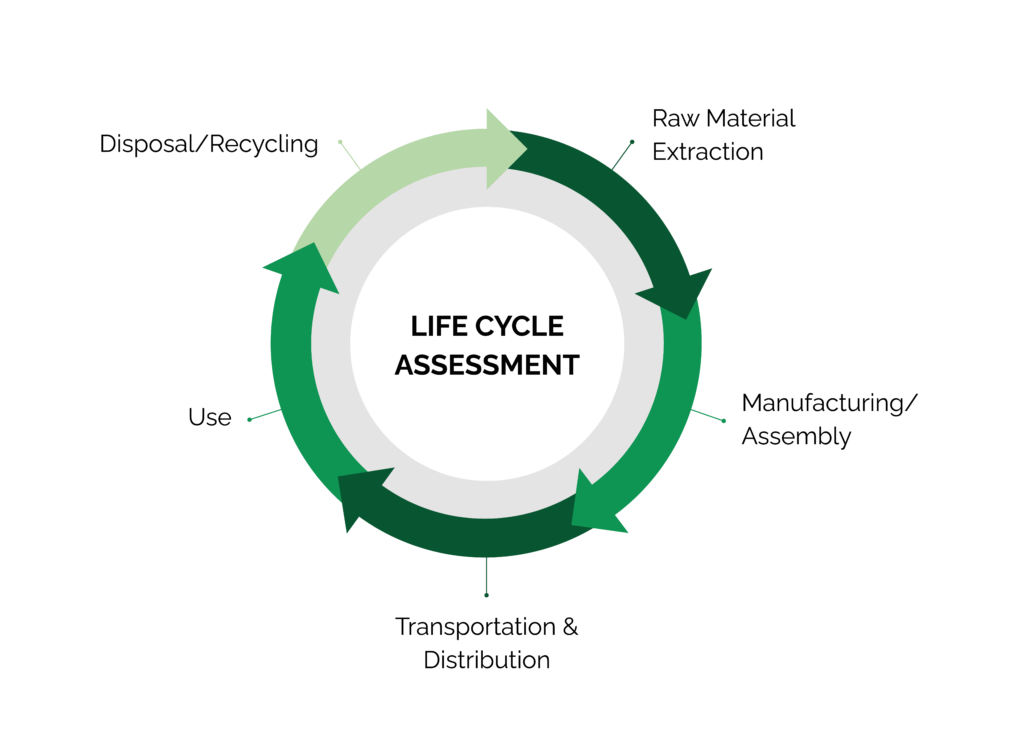
Life-Cycle Assessment (LCA) is a systematic approach to evaluating the environmental impacts of a product, process, or service throughout its entire life cycle. This includes everything from raw material extraction to manufacturing, transportation, use, and end-of-life disposal or recycling.
Essentially, it’s a “cradle-to-grave” analysis. It provides a comprehensive understanding of the environmental burdens associated with a product or service.
Why is LCA Important?
LCA is crucial for several reasons. It helps businesses, policymakers, and consumers make informed decisions about the environmental impacts of their choices.
- Identifies environmental hotspots: LCA can pinpoint the stages in a product’s life cycle that contribute the most to environmental problems.
- Supports sustainable product design: By understanding the environmental impacts, companies can design products that are more eco-friendly.
- Informs policy decisions: LCA provides data to support the development of effective environmental policies and regulations.
- Promotes transparency: LCA helps companies be more transparent about the environmental performance of their products.
- Enables informed consumer choices: LCA results can be used to educate consumers and help them make more sustainable purchasing decisions.
The Scope of LCA
The scope of an LCA can vary depending on the goal of the study. It can be a comprehensive analysis of all stages of a product’s life cycle, or it can focus on specific stages or environmental impacts.
The scope should be clearly defined at the beginning of the study. This ensures that the results are relevant and useful for the intended purpose.
The Four Stages of a Life-Cycle Assessment
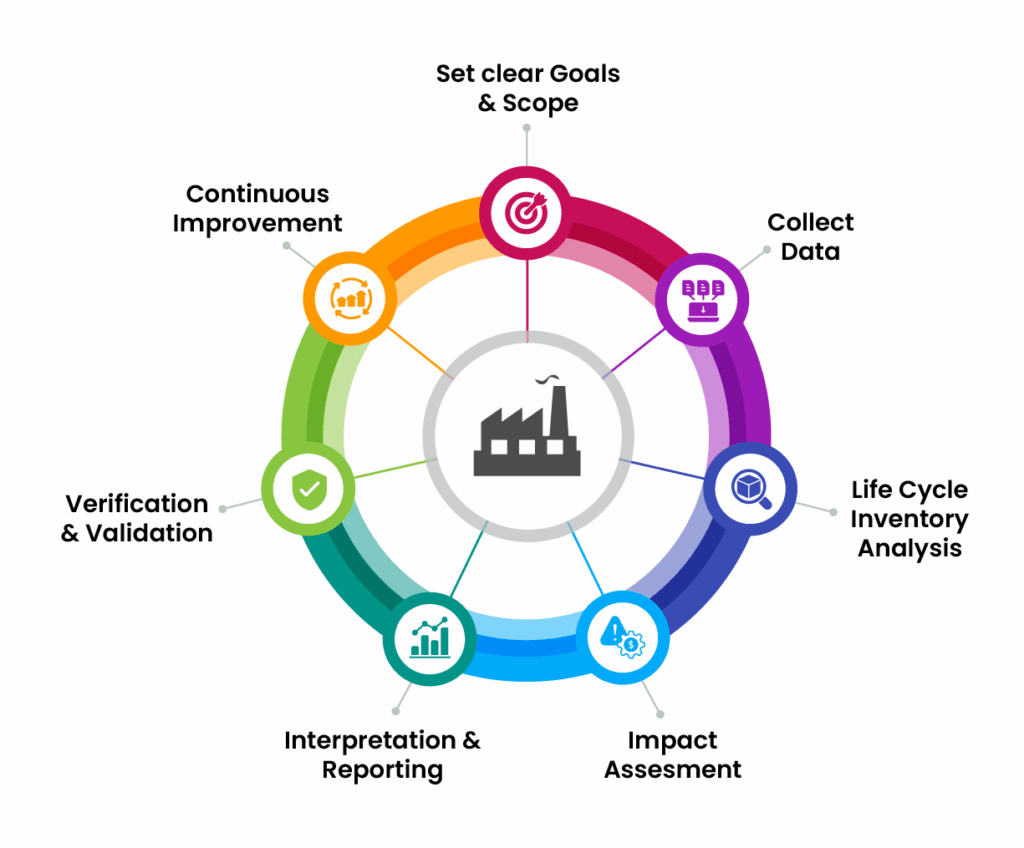
LCA typically involves four main stages, as defined by the ISO 14040 and 14044 standards. These stages are:
- Goal and Scope Definition
- Inventory Analysis
- Impact Assessment
- Interpretation
Let’s break down each of these stages in detail.
1. Goal and Scope Definition
This is the foundation of the entire LCA process. It involves clearly defining the purpose of the study, the product system being assessed, and the intended audience.
- Defining the Goal: What questions are you trying to answer with the LCA? For example, are you trying to compare the environmental impacts of two different products, or identify areas for improvement in a product’s design?
- Defining the Scope: This involves specifying the boundaries of the study. What stages of the product’s life cycle will be included? What geographical area will be covered? What environmental impacts will be considered?
- Functional Unit: The functional unit is a key element of the scope definition. It defines the performance requirements of the product system being studied. It allows for a fair comparison between different products or services that provide the same function. For example, the functional unit for comparing two different types of light bulbs might be “providing 1000 lumens of light for 1000 hours.”
2. Inventory Analysis
The inventory analysis involves collecting data on all the inputs and outputs associated with the product system throughout its life cycle. This is often the most time-consuming and data-intensive stage of the LCA.
- Data Collection: This includes gathering data on raw material extraction, energy consumption, water use, emissions to air and water, and waste generation.
- Process Flow Diagram: A process flow diagram is a visual representation of the product system. It shows all the processes involved in the life cycle and the flows of materials and energy between them.
- Allocation: Allocation is necessary when a process produces multiple products or byproducts. The environmental burdens of the process need to be allocated among the different products based on some criteria, such as mass, energy content, or economic value.
- Data Quality: It’s important to ensure that the data used in the inventory analysis is accurate, reliable, and representative of the product system being studied.
3. Impact Assessment
The impact assessment stage involves evaluating the potential environmental impacts associated with the inputs and outputs identified in the inventory analysis.
- Classification: This involves assigning the inventory data to different impact categories, such as climate change, ozone depletion, acidification, eutrophication, and human toxicity.
- Characterization: This involves calculating the magnitude of the impact for each impact category. This is done using characterization factors, which convert the inventory data into a common unit of measurement for each impact category. For example, greenhouse gas emissions are typically converted to carbon dioxide equivalents (CO2e) using global warming potentials (GWPs).
- Normalization (Optional): Normalization involves comparing the impact assessment results to a reference value, such as the total environmental impact of a region or country. This can help to put the results into perspective and identify the most significant environmental impacts.
- Weighting (Optional): Weighting involves assigning different weights to the different impact categories based on their relative importance. This allows for an aggregation of the results into a single score or index. However, weighting is a subjective process and can influence the results of the LCA.
4. Interpretation
The interpretation stage involves analyzing the results of the LCA and drawing conclusions about the environmental performance of the product system.
- Identifying Significant Issues: This involves identifying the stages in the life cycle that contribute the most to the environmental impacts.
- Evaluating Completeness, Sensitivity, and Consistency: It’s important to evaluate the completeness, sensitivity, and consistency of the LCA results to ensure that they are reliable and robust.
- Drawing Conclusions and Recommendations: Based on the results of the LCA, conclusions can be drawn about the environmental performance of the product system, and recommendations can be made for improving its environmental performance.
- Reporting: The results of the LCA should be clearly and transparently reported, including the goal and scope of the study, the data sources used, the assumptions made, and the limitations of the study.
Benefits of Conducting a Life-Cycle Assessment
There are numerous benefits to conducting a Life-Cycle Assessment. It can help businesses, policymakers, and consumers make more informed decisions about the environmental impacts of their choices.
- Improved Product Design: LCA can help companies identify opportunities to improve the environmental performance of their products. By understanding the environmental impacts of different materials, processes, and design choices, companies can design products that are more eco-friendly.
- Reduced Environmental Impact: By identifying environmental hotspots in the product life cycle, companies can focus their efforts on reducing the impacts in those areas. This can lead to significant reductions in energy consumption, water use, emissions, and waste generation.
- Cost Savings: In many cases, reducing environmental impact can also lead to cost savings. For example, using less energy or water can reduce operating costs, and using recycled materials can reduce raw material costs.
- Enhanced Reputation: Companies that conduct LCAs and communicate the results to their stakeholders can enhance their reputation and build trust with consumers.
- Competitive Advantage: Companies that can demonstrate the environmental benefits of their products may gain a competitive advantage in the marketplace.
- Compliance with Regulations: In some cases, LCA may be required by regulations or standards. For example, some countries require LCA for certain types of products or industries.
Challenges of Conducting a Life-Cycle Assessment
While LCA offers many benefits, there are also several challenges associated with conducting a Life-Cycle Assessment.
- Data Availability: Gathering accurate and reliable data on all the inputs and outputs associated with a product’s life cycle can be challenging, especially for complex products with long supply chains.
- Data Quality: The quality of the data used in the LCA can significantly affect the results. It’s important to ensure that the data is accurate, representative, and up-to-date.
- Complexity: LCA can be a complex and time-consuming process, requiring specialized knowledge and expertise.
- Subjectivity: Some aspects of LCA, such as allocation and weighting, involve subjective judgments that can influence the results.
- Cost: Conducting a comprehensive LCA can be expensive, especially if it requires extensive data collection and analysis.
- Interpretation: Interpreting the results of an LCA can be challenging, especially for non-experts. It’s important to communicate the results clearly and transparently.
LCA Software and Tools
Fortunately, there are a variety of software and tools available to help conduct Life-Cycle Assessments. These tools can streamline the process and make it more efficient.
- SimaPro: A widely used LCA software package that provides a comprehensive set of features for data collection, modeling, and impact assessment.
- GaBi: Another popular LCA software package that offers a user-friendly interface and a large database of life cycle inventory data.
- OpenLCA: An open-source LCA software platform that is free to use and offers a variety of features for data collection, modeling, and impact assessment.
- ecoinvent Database: A comprehensive database of life cycle inventory data for a wide range of materials, processes, and products.
- US EPA’s Sustainable Materials Management (SMM) Web Academy: Offers online courses and resources on LCA and sustainable materials management.
Examples of Life-Cycle Assessment Applications
Life-Cycle Assessments are used in a wide variety of applications across different industries. Here are a few examples:
- Packaging: LCA can be used to compare the environmental impacts of different packaging materials, such as plastic, paper, and glass.
- Building Materials: LCA can be used to assess the environmental performance of different building materials, such as concrete, steel, and wood.
- Energy Production: LCA can be used to compare the environmental impacts of different energy sources, such as fossil fuels, nuclear power, and renewable energy.
- Transportation: LCA can be used to assess the environmental impacts of different transportation modes, such as cars, trucks, trains, and airplanes.
- Agriculture: LCA can be used to evaluate the environmental impacts of different agricultural practices, such as conventional farming and organic farming.
- Electronics: LCA can be used to assess the environmental impacts of electronic products, such as computers, smartphones, and televisions.
Tips for Conducting an Effective Life-Cycle Assessment
To ensure that your Life-Cycle Assessment is effective and provides useful results, consider these tips:
- Clearly Define the Goal and Scope: This is the most important step in the LCA process. Make sure that you have a clear understanding of the purpose of the study and the boundaries of the system being assessed.
- Use High-Quality Data: The quality of the data used in the LCA can significantly affect the results. Use accurate, representative, and up-to-date data whenever possible.
- Be Transparent: Be transparent about the methods, assumptions, and data sources used in the LCA. This will help to build trust with stakeholders and ensure that the results are credible.
- Consider Uncertainty: LCA involves many uncertainties. Be sure to consider these uncertainties when interpreting the results and drawing conclusions.
- Focus on Improvement: The ultimate goal of LCA is to identify opportunities for improvement. Use the results of the LCA to develop strategies for reducing the environmental impacts of the product or service being assessed.
- Engage Stakeholders: Engage with stakeholders throughout the LCA process. This will help to ensure that the study is relevant and useful for their needs.
- Use LCA Software: Consider using LCA software to streamline the process and make it more efficient.
The Future of Life-Cycle Assessment
Life-Cycle Assessment is a constantly evolving field. As technology advances and our understanding of environmental impacts improves, LCA will continue to play an increasingly important role in promoting sustainability.
- Increased Automation: Advances in data collection and analysis will lead to increased automation in LCA, making it easier and more efficient to conduct studies.
- Integration with Other Sustainability Tools: LCA will be increasingly integrated with other sustainability tools, such as carbon footprinting, water footprinting, and social life cycle assessment.
- Greater Use of Big Data: The availability of big data will enable more comprehensive and accurate LCAs, providing a more complete picture of the environmental impacts of products and services.
- Standardization: Efforts to standardize LCA methodologies and data will continue, making it easier to compare the results of different studies.
- Increased Adoption: As awareness of the importance of sustainability grows, LCA will be increasingly adopted by businesses, policymakers, and consumers.
Conclusion
Understanding the environmental footprint of products and services is more important than ever. A Life-Cycle Assessment Basics Guide provides a framework for analyzing this impact, from raw materials to disposal. By understanding the four stages of LCA – Goal and Scope Definition, Inventory Analysis, Impact Assessment, and Interpretation – you can gain valuable insights into how to make more sustainable choices.
Whether you are a business looking to improve your product design or a consumer aiming to make informed purchases, LCA offers a powerful tool for promoting environmental responsibility. What are your thoughts on LCA? Share your experiences or questions below!
FAQ Section
Here are some frequently asked questions about Life-Cycle Assessment:
Q: What is the difference between LCA and carbon footprinting?
A: Carbon footprinting is a subset of LCA that focuses specifically on greenhouse gas emissions. LCA is a broader assessment that considers a wider range of environmental impacts, such as water use, air pollution, and resource depletion.
Q: How much does it cost to conduct an LCA?
A: The cost of conducting an LCA can vary widely depending on the scope of the study, the complexity of the product system, and the availability of data. A simple LCA can cost a few thousand dollars, while a comprehensive LCA can cost tens of thousands of dollars.
Q: Who should conduct an LCA?
A: LCA can be conducted by businesses, government agencies, non-profit organizations, and academic researchers. It is often conducted by environmental consultants or LCA specialists.