
Ever wonder what separates the financial world’s rockstars, stocks, from its steady backbone, bonds? It’s a question that trips up many new investors. This guide will break down the difference between stocks and bonds clearly, so you can confidently navigate your investment journey.
Understanding the Basics: Stocks
Let’s start with the exciting world of stocks. Think of stocks as tiny pieces of ownership in a company.
When you buy stock, you’re becoming a shareholder. This means you have a claim on a portion of the company’s assets and earnings.
What Does Owning Stock Mean?
Owning stock means you’re entitled to a share of the company’s profits, often distributed as dividends. You also get voting rights on certain company matters.
The value of your stock can go up or down depending on how well the company performs. This is where the potential for higher returns comes in.
Types of Stocks
There are mainly two types of stocks: common and preferred.
Common stock gives you voting rights and the potential for capital appreciation. Preferred stock usually doesn’t have voting rights but offers a fixed dividend payment.
Different classifications like growth stocks, value stocks, and dividend stocks exist. These categories reflect various investment strategies and risk profiles.
Understanding the Basics: Bonds
Now, let’s explore the world of bonds. Bonds are essentially loans you make to a company or government.
When you buy a bond, you’re lending money in exchange for regular interest payments and the return of your principal at a specific date.
What Does Owning Bonds Mean?
Owning bonds means you’re a creditor, not an owner. You have a legal claim to receive your interest payments and principal back.
Bonds are generally considered less risky than stocks. They provide a more predictable income stream.
Types of Bonds
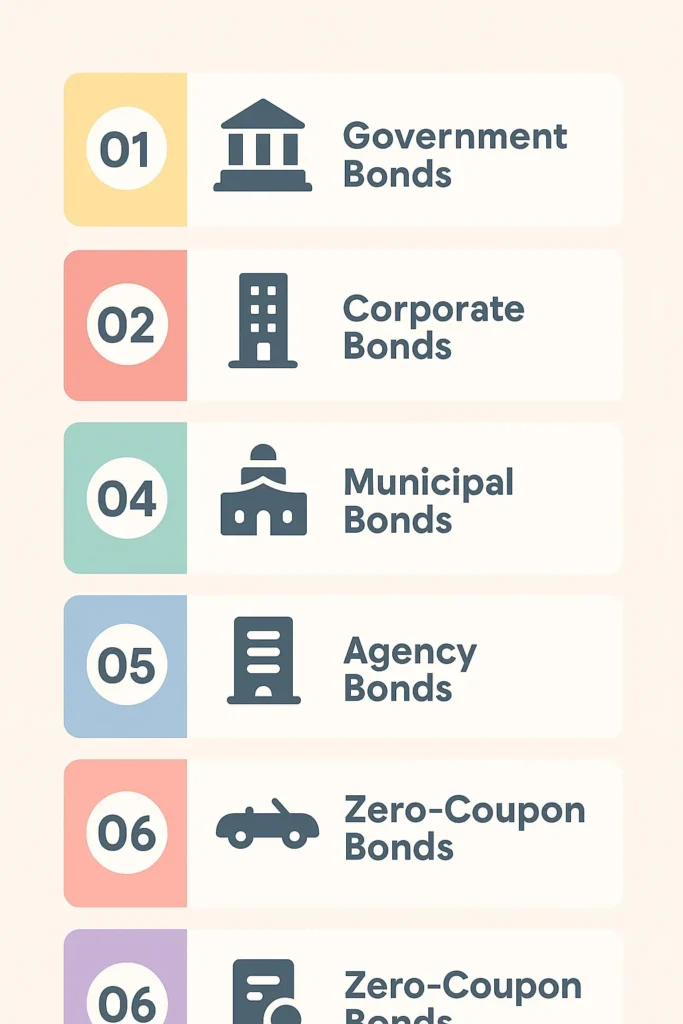
There are several types of bonds, including government bonds, corporate bonds, and municipal bonds.
Government bonds are issued by national governments and are usually considered very safe. Corporate bonds are issued by companies and carry a higher risk but also potentially higher returns. Municipal bonds are issued by state and local governments and are often tax-exempt.
Key Differences: Stocks vs. Bonds
The difference between stocks and bonds clearly lies in their fundamental nature. Stocks represent ownership, while bonds represent debt.
This distinction leads to significant differences in risk, return, and income potential.
Ownership vs. Debt
Stocks give you a piece of the company. Bonds make you a lender to the company.
This difference has significant implications for your rights and claims on the company’s assets.
Risk and Return
Stocks typically offer higher potential returns but come with higher risk. Bond returns are generally lower but offer greater stability.
Consider your risk tolerance when choosing between stocks and bonds.
Income Potential
Stocks can provide income through dividends, but these are not guaranteed. Bonds provide a fixed income stream through regular interest payments.
The predictability of bond income can be appealing for income-focused investors.
Risk Factors: What to Consider
Understanding the risk factors associated with stocks and bonds is crucial. This knowledge helps you make informed investment decisions.
Stock Market Volatility

Stock prices can fluctuate dramatically due to various factors. These include economic conditions, company performance, and investor sentiment.
Be prepared for potential losses in the stock market.
Interest Rate Sensitivity
Bond prices are sensitive to changes in interest rates. When interest rates rise, bond prices typically fall.
Understand how interest rate changes can affect your bond investments.
Credit Risk
Corporate bonds carry credit risk. This is the risk that the issuer may default on their debt obligations.
Assess the creditworthiness of bond issuers before investing.
Return Potential: What to Expect
The potential returns from stocks and bonds vary significantly. This variation depends on market conditions, issuer performance, and other factors.
Historical Stock Market Returns
Historically, the stock market has provided higher returns than bonds over the long term. However, these returns come with greater volatility.
Remember that past performance is not indicative of future results.
Historical Bond Market Returns
Bonds have historically provided lower but more stable returns than stocks. They offer a buffer during economic downturns.
Consider the role of bonds in diversifying your portfolio.
Dividends vs. Interest
Stocks can provide income through dividends, which can grow over time. Bonds provide fixed interest payments, offering a predictable income stream.
Choose investments that align with your income needs and growth expectations.
Investment Strategies: Mixing Stocks and Bonds
Many investors choose to combine stocks and bonds in their portfolios. This diversification strategy can help balance risk and return.
Asset Allocation
Asset allocation involves dividing your investment portfolio among different asset classes. This includes stocks, bonds, and other investments.
Determine the right asset allocation based on your risk tolerance, time horizon, and financial goals.
Diversification
Diversification involves spreading your investments across different stocks, bonds, and sectors. This reduces the impact of any single investment on your overall portfolio.
Diversify your portfolio to mitigate risk and enhance returns.
Rebalancing
Rebalancing involves periodically adjusting your asset allocation to maintain your desired risk level. This may involve selling some assets and buying others.
Rebalance your portfolio regularly to stay on track with your financial goals.
Investing in Stocks: A Deeper Dive
To make informed decisions, it’s essential to delve deeper into investing in stocks. This includes understanding different investment approaches and strategies.
Individual Stocks vs. Stock Funds
You can invest in individual stocks, which gives you direct ownership in a company. Alternatively, you can invest in stock funds, such as mutual funds or ETFs, which hold a diversified portfolio of stocks.
Consider the pros and cons of each approach before investing.
Growth Stocks vs. Value Stocks
Growth stocks are companies expected to grow at a faster rate than the market average. Value stocks are companies that are undervalued by the market.
Choose stocks that align with your investment style and risk tolerance.
Dividend Stocks
Dividend stocks are companies that pay regular dividends to shareholders. These stocks can provide a steady income stream.
Look for companies with a history of consistent dividend payments.
Investing in Bonds: A Deeper Dive
Similarly, understanding the nuances of bond investing is crucial for making informed decisions. This includes exploring different bond types and strategies.
Government Bonds vs. Corporate Bonds
Government bonds are issued by national governments and are generally considered very safe. Corporate bonds are issued by companies and carry a higher risk but also potentially higher returns.
Assess the risk and return trade-offs of each type of bond.
Bond Funds
Bond funds, such as mutual funds or ETFs, offer a diversified portfolio of bonds. These funds can provide exposure to a variety of bond types and maturities.
Consider bond funds as a convenient way to diversify your bond investments.
Bond Ladders
A bond ladder involves investing in bonds with staggered maturities. This strategy can help manage interest rate risk and provide a steady stream of income.
Explore bond ladders as a way to optimize your bond portfolio.
How to Choose: Stocks or Bonds?
Deciding whether to invest in stocks or bonds depends on your individual circumstances. These circumstances include your risk tolerance, time horizon, and financial goals.
Risk Tolerance
Assess your comfort level with risk. If you’re risk-averse, you may prefer bonds. If you’re comfortable with higher risk, you may prefer stocks.
Understand your risk tolerance before making investment decisions.
Time Horizon
Consider your time horizon. If you have a long time horizon, you can afford to take on more risk with stocks. If you have a short time horizon, you may prefer bonds.
Align your investments with your time horizon.
Financial Goals
Determine your financial goals. If you’re saving for retirement, you may want to invest in a mix of stocks and bonds. If you’re saving for a short-term goal, you may prefer bonds.
Choose investments that align with your financial goals.
Building a Balanced Portfolio
Creating a balanced portfolio is essential for achieving your financial goals. This involves carefully allocating your assets among different investment types.
Determine Your Asset Allocation
Decide what percentage of your portfolio should be allocated to stocks, bonds, and other assets. This will depend on your risk tolerance, time horizon, and financial goals.
Use asset allocation tools to help you determine the right mix.
Diversify Within Asset Classes
Diversify your investments within each asset class. For example, invest in a variety of stocks from different sectors and in bonds with different maturities.
Diversification can help reduce risk and enhance returns.
Rebalance Regularly
Rebalance your portfolio periodically to maintain your desired asset allocation. This will help ensure that your portfolio stays aligned with your risk tolerance and financial goals.
Rebalancing is an important part of managing a balanced portfolio.
Expert Advice: Tips for Beginners
For beginners, navigating the world of stocks and bonds can be overwhelming. Here are some tips from financial experts.
Start Small
Start with a small amount of money and gradually increase your investments as you become more comfortable.
Don’t feel pressured to invest large sums of money right away.
Do Your Research
Research different stocks and bonds before investing. Understand the risks and potential returns of each investment.
Knowledge is power when it comes to investing.
Seek Professional Advice
Consider seeking advice from a financial advisor. They can help you create a personalized investment plan based on your individual circumstances.
A financial advisor can provide valuable guidance and support.
Common Mistakes to Avoid
Avoiding common investment mistakes can help you protect your capital and achieve your financial goals.
Emotional Investing

Avoid making investment decisions based on emotions. Stick to your investment plan and avoid panic selling during market downturns.
Emotional investing can lead to poor decisions.
Chasing Hot Stocks
Avoid chasing “hot” stocks or investment trends. Focus on investing in quality companies with strong fundamentals.
Chasing hot stocks can be a risky strategy.
Ignoring Diversification
Don’t put all your eggs in one basket. Diversify your portfolio to reduce risk.
Diversification is a key principle of successful investing.
The Future of Stocks and Bonds
The future of stocks and bonds is constantly evolving. Stay informed about market trends and economic developments.
Technological Advancements
Technological advancements are transforming the financial industry. These advancements include the rise of robo-advisors and online trading platforms.
Embrace technology to improve your investment experience.
Economic Trends
Economic trends, such as inflation and interest rate changes, can significantly impact the stock and bond markets.
Stay informed about economic developments and their potential impact on your investments.
Regulatory Changes
Regulatory changes can also affect the stock and bond markets. Stay informed about new regulations and their potential impact on your investments.
Compliance with regulations is essential for responsible investing.
In summary, understanding the difference between stocks and bonds clearly is crucial for making informed investment decisions. Stocks offer higher potential returns but come with higher risk, while bonds offer lower but more stable returns. Diversifying your portfolio with a mix of stocks and bonds can help balance risk and return, allowing you to achieve your financial goals. Consider your risk tolerance, time horizon, and financial goals when choosing between stocks and bonds, and seek professional advice if needed. What are your preferred investment strategies? Share your experiences below!
FAQ Section
Here are some frequently asked questions about stocks and bonds:
What is the main difference between stocks and bonds?
The main difference between stocks and bonds clearly is that stocks represent ownership in a company, while bonds represent debt. Stockholders have a claim on the company’s assets and earnings, while bondholders are creditors who are owed interest and principal.
Which is riskier, stocks or bonds?
Stocks are generally riskier than bonds because their prices can fluctuate more dramatically. Bonds are generally considered less risky because they provide a more predictable income stream and are less sensitive to market volatility.
How do I decide whether to invest in stocks or bonds?
The decision to invest in stocks or bonds depends on your individual circumstances, including your risk tolerance, time horizon, and financial goals. If you’re risk-averse and have a short time horizon, you may prefer bonds. If you’re comfortable with higher risk and have a long time horizon, you may prefer stocks.